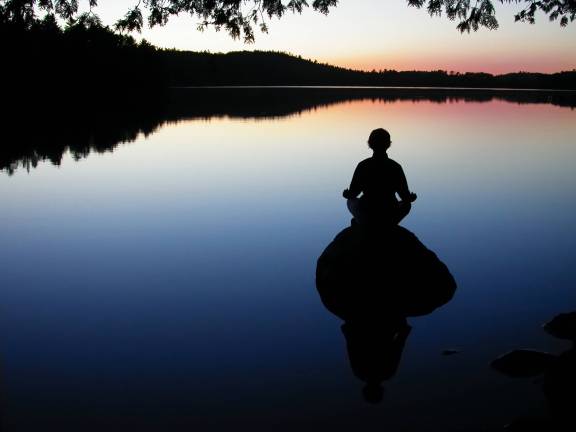
For the average young adult in the western world, stress has become a habit, one might even say an addiction. We are swept up in our busy lives of high school, college, or a new job, trying to find the right balance of getting things done and having fun. From this constant juggle anxiety tends to lump up until it forms a life of its own and starts to eat you within. Stress itself becomes a ball and chain in our everyday lives, dragging down not only our mental state but our productivity and focus. When we are stressed we tend to lose control over our emotions, and in turn our emotions begin to control us.
The easy-fix most Americans turn to is getting a prescription to the large assortment of name-brand pills marketed to decrease anxiety and depression. This has lead to a large percentage of the population resorting to chemicals to control their emotional state. For a brief period I was on one of these designer medications, and although it may have reduced my anxiety, it stripped away a lot of the other emotions that I experienced. For four or so months I was at a psychological flatline, I was no longer stressed out all the time, however I wasn’t experiencing any real feelings of happiness anymore either. The drug had stripped me of a portion of my humanity. It ultimately led to me being complacent with almost everything, which in turn negatively affected my studies, my relationship, and my overall well-being. My reality had been unnaturally altered, and I realized I no longer had control over my life.
I had to take back that control, over my emotions, my drive, my life. I knew I had to make a change, so I quit taking the medication, and turned to eastern philosophy. I began to study Buddhism, which in turn lead me to the practice of meditation. Although my study and practice of Buddhist principles couldn’t be followed strictly due to its incompatibility with Western society, I still tried to live by its basic ideas and practiced meditating everyday. I still do it today.
What is meditation?
Meditation is the practice of deep thought or inducing a mode of consciousness that can promote relaxation and mindfulness as well as improve mental state and compassion. It is a staple practice in Eastern religions such as Buddhism and Taoism, and can lead to benefits for both physical and mental health. Most people associate meditation with monks or yogis sitting cross-legged with their eyes closed repeating “OHHHHHHM”, however this is not the only way to meditate. However the practices involved with this form of meditating will be explained!
How is it helpful?
Meditation is practiced to increase mindfulness, or open attention to the present. This is also often commonly known as “living in the moment”. Mindfulness can have benefit such as reducing depression and anxiety, overcoming addiction and bad habits, and can even help the body heal quicker! Meditation allows the brain’s thought processing to switch from the left prefrontal cortex to the right prefrontal cortex. This occurrence has been associated with shifting of feelings of depression and anger to increased happiness and a more balanced set of emotions. Meditation can provide greater natural benefits than antidepressant drugs that do it synthetically.
I started meditating in the summer of 2013 and I continue that practice to this very day. Over the years I have seen gradual improvements to my focus, emotional state, patience, relationships, and outlook on life. Currently I try to meditate once a day. My current routine includes twenty minutes before I go to bed. Now obviously there are sometimes breaks or changes in the routine, but it’s important to establish habit and a little bit of discipline to retain the long term benefits of meditation.
I didn’t always meditate with this pattern, I had to take baby steps. When I first started, it was grueling to even sit still for five minutes at a time, let alone try to quiet my mind. However like with anything, practice makes perfect. With a bit of discipline, I was able to work my way up to two twenty minute sessions per day. For someone who wants to try meditation, there a few basic things to remember before jumping right in. In today’s fast-paced highly driven society, the typical mind races in every waking hour. When your self-conscience tries to quiet itself, it tends to rev up even faster. However there are a few tricks you can practice to begin training your mind to slow down.
The primary one includes “sitting” for five minutes a day. For this beginner meditation session, all you’ll need to do is find a comfortable place to sit. It can be on a couch, cross-legged on the floor or on a yoga mat, or even lying down on a bed. The actual method doesn’t matter too much, as long as you keep your back straight and your body relaxed. This itself will take some practice, so don’t stress out too much if you find yourself struggling the first few, or even many times. The more you do it, the easier it will be to do. Eventually you’ll start to find that your mind stops racing through every thought that comes to it, and even starts to quiet a bit. You’ll begin to pay more attention to your current surroundings and mood, and less about that big meeting or test you have later in the day or how much work you have to get done. The more you practice the more mindful you will become, both during sessions and when you are going about your day. Eventually sitting for five minutes will become cake, and you can gradually increase the time and frequency of your sessions. You don’t need to spend an hour meditating everyday. You might even be too busy to do twenty minutes. What’s crucial is that you are taking time for yourself to meditate and try to quiet your mind, even if it is only for five minutes a day.
Before you start sitting, be sure to set a timer for five minutes, when you start it, put the timer out of sight, or close your eyes and don’t look at it. This is important because you’ll most likely want to check how much longer you have to sit there doing “nothing”. When you begin, your mind will start to race to all of the things that you need to get done, something you’ve been worrying about, or some other random thought. This is normal. I have been meditating for over two years now and my mind still wanders. The important thing to do is to be aware that this will happen. After some practice when you feel your mind begin to wander you will be able to refocus and quiet your mind.
So what should you be focusing on? That depends. There are several different types of meditation (a google search will help here) however the main difference between them is what the person focuses their mind on during the session. One of the most common is to focus on the breath. While sitting, you will want to take deep breaths in and out, while paying attention to everything about it. How the air feels and sounds going through your nose, the slight pause between when you stop breathing in and begin to exhale through your mouth. The feeling of your lungs expanding, and then releasing. Focusing your attention on this will keep your mind occupied from extraneous thoughts and worries. Your mind may still wander, don’t fret if this happens. Merely return to focusing on your breath. Other forms of meditation will have the mind focusing on repeating a mantra or syllable, an emotion, a pleasant memory, or maybe just an idea or concept that may improve your overall wellbeing. Transcendental meditation includes the practice of implementing a personalized mantra, however there is controversy as to whether this provides any actual benefit. Regardless, the repetition of a phrase allows you to focus your mind on one thing, which is the whole purpose.
Some people are skeptical that merely just sitting will have any benefits on a person. However there is research that shows how neurological pathways in the brain can be rerouted to change the way that it processes information, changing that individual’s perception and thought processing.
There are a few other tricks you can use if five minutes is too much to handles to start off. Merely just taking a moment to try and quiet your mind during the day can help improve your mental state and be more mindful. It’s very easy to take sixty seconds or so to merely stop and take a few deep breaths. If you struggle to quiet your mind, then just take some time to notice what is currently going on around you. Take in at that particular moment what you are seeing, smelling, hearing, and feeling. Another good practice is to momentarilly take appreciation for everything good that you have in your life. Your family, friends, health, job, education, and luxuries are all things that most people take for granted. Realizing all the good that you have in your life can make a dramatic impact on your outlook on life. This mindset and the previously mentioned tricks can all be implemented in your meditation sessions as well.
I personally have seen tremendous progress in myself from practicing meditation. At the very least it has made me more patient, increased my focus in class or while working, as well as improved my ability to go with the flow. Little things that used to make me really anxious or angry don’t bother me as much. That isn’t to say I don’t still experience those things, but meditation has allowed me to recognize when those negative emotions are occurring, allowing me to mitigate its effect on me. I now have greater control over my emotions and thoughts, rather than letting them reign over me.
Meditation hasn’t necessarily allowed me to blossom into the reincarnation of Buddha, but it has made me into a better person in almost every aspect. I like to think I am kinder, less selfish, as well as more assertive, driven, and creative. When I started, I was at a very dark point in my life. My girlfriend had broken up with me, my academics and work were suffering, and I was very bitter and angry. Meditating made me more mindful of my shortcomings, as well as the world around me, allowing me to take steps to get my life back on track and enjoy it more. This mindfulness is a theme that will pop up in many other posts, and is something I constantly try to improve so I can continue to grow as a person.
After reading this, hopefully you are able to relate to some of my experiences, and can maybe find a place for meditation and mindfulness in your own life. Happy sitting!
NOTES:
Basic steps for integrating meditation into your life:
Take 5 minutes every day to appreciate everything that you have in your life
Sit still for five minutes every day. Set an alarm on your phone or whatever find a comfortable place, sit cross legged, lie down, and close your eyes. You can attempt to quiet your mind but this will typically be self defeating and won’t help you progress. The best strategy is to let whatever thoughts flow through your mind, but be aware of the fact that this is happening.
Focus on the breath, an emotion you are feeling, something you want to improve on about yourself, a fond memory that you have, or a calming phrase or syllable. These are the basis of several different types of mediation that won’t be discussed here, but the main idea is to focus your mind on one thing.
Have a central idea or emotion to meditate about. If your mind starts to wander away, don’t beat yourself up, merely continue concentrating on your breath or the idea .
The key thing to remember is to practice.
Benefits of meditation:
Better focus
More mindful
Decrease anxiety
Increased perception
 Excelitarian